
About the work
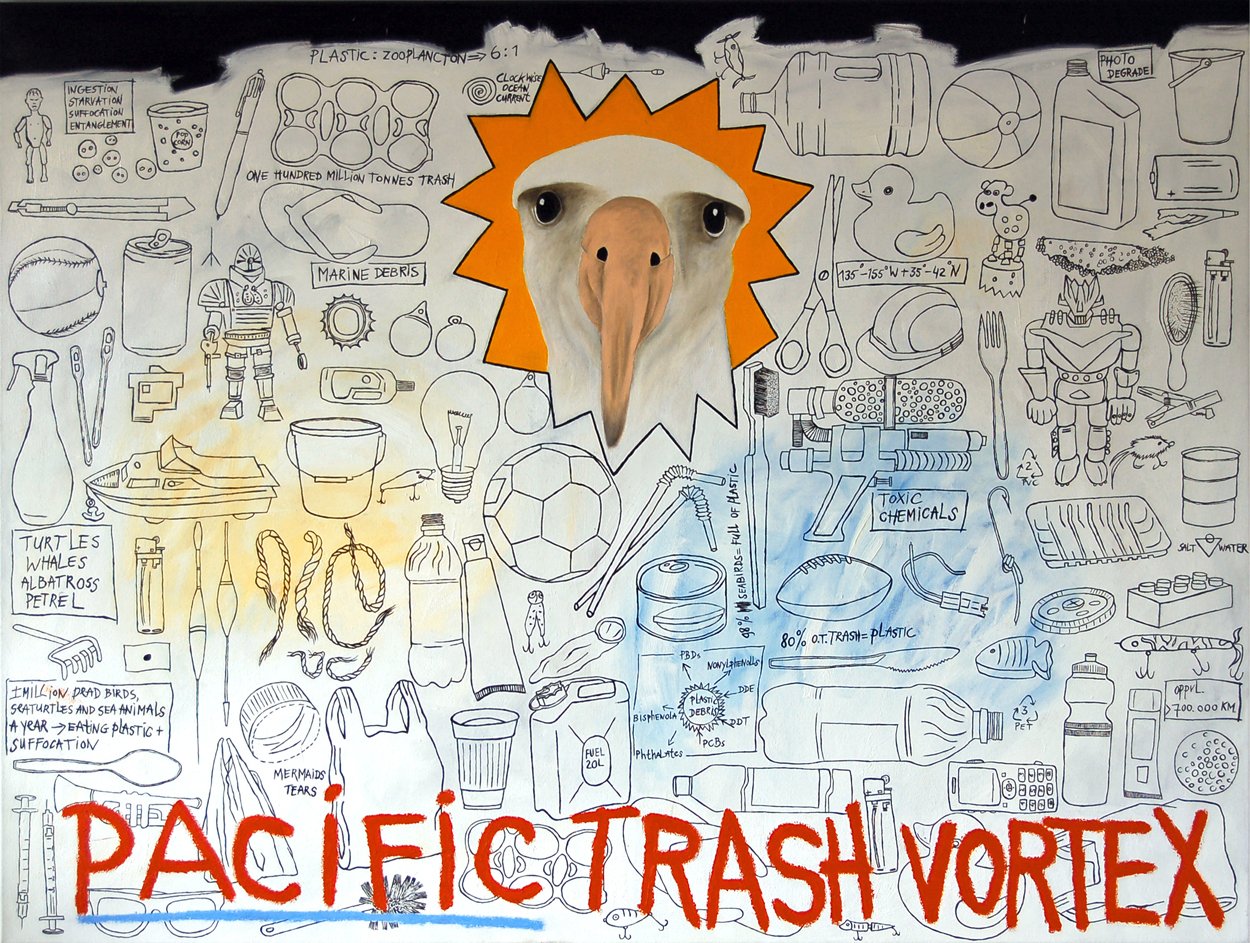
The garbage whirlpools in almost all oceans (Pacific Trash Vortex or Great Garbage Patch) are floating concentrations formed by ocean currents, primarily of plastic waste. Without measures, the plastic soup will become 30 times larger between now and 2015. The plankton – plastic ratio is 1:6. 80% of the waste comes from land, 20% from ships. For every 1.5 km2, 46,000 plastic particles float around. Experts calculated that between 5 and 13 million tons are dumped into the sea each year. It is mainly countries with rapid economic growth that contribute to the plastic soup (e.g., China and Indonesia).
The floating pieces and bits of plastic resemble food and for that reason are eaten by fish, birds, whales, seals, and sea turtles. 98% of seabirds have plastic in their stomachs, averaging no less than 30 pieces! Many animals also become entangled in the plastic and die for that reason.
Specifications
| Publisher | Emmy Gostelie |
|---|---|
| Framed | Not included |
| Condition/details | Good |
| Signature | Included |


